"I'm not a techie person, I'm not a software engineer, and I don't write code. But I've been fortunate to work with creative people who, like me, see a vision of how computer technology can improve the quality of care we deliver to our patients.”
— Steven Bornstein, M.D.
I am missing a great friend and mentor of mine, Dr. Steve Bornstein. Let's rewind the clock for moment so that you can understand more about why I am missing him.
Relieved to have been hired at Kaiser Permanente after a short stretch of unemployment and the birth of my second child, it was 1998, in the midst of the dot-com bubble. My new boss in KP's Golden Gate Service Area IT organization gave me a 20-minute pep talk, told me to figure out what I needed to do, and sent me out to South San Francisco Medical Center (Kaiser SSF). There, I was to interview hospital leaders and figure out how to build a program of computer literacy for clinic and hospital staff. What happened after that turned out to be much more than I had bargained for, and led me on an unforgettably inspiring 14-year journey with Kaiser Permanente.
Shortly after getting situated at Kaiser SSF, my boss called me and asked me to keep tabs on a “maverick physician.” My boss was concerned that some of the technological innovations encouraged at Kaiser SSF might result in PHI being inadvertently exposed if the right security was not in place. He suggested that I take his place on the Kaiser SSF Innovations committee, which was then chaired by Dr. Steven Bornstein, the maverick physician he had mentioned.
If you are like me, you receive all sorts of lists about the qualities of successful leaders. In seemingly endless profusion, these are predictably scattered throughout my emails and social media feeds. Sometimes I get sucked into scrolling through a list of the “the five traits…,” or “ten behaviors of successful leaders.” Puzzled to have somehow not yet found the definitive list, I scroll earnestly through them, confirming that I already know or do this or that, or regarding skeptically some of the more off-the-wall assertions. As I do that, I always try to imagine some archetype of a perfect leader who does it all right.
Encountering a truly visionary leader in the wild is altogether different. These real leaders exhibit the kind charisma that defies formula and resists definition. They are sometimes unpredictable in a way that renders moot the contemporary trend of trying to capture their essence in a list. If you are lucky, mentors like this have appeared in your life and changed your thinking or accelerated your career trajectory.
Dr. Bornstein was one of these. The work of the Innovations committee was to fund technological and operational improvement ideas submitted by clinicians and other staff at the SSF Medical Center. There were some great ideas that were proposed and funded, many of which were way ahead of their time. While leading this effort Dr. Bornstein also managed a panel of OB/GYN patients, and was active in regional physician-led technology projects.
Over a period of months and years that followed our meeting, Steve invited me to collaborate with him on some of these projects, first asking me to chair Innovations, and later to help him with the adoption pieces for a series of IT projects that would benefit physicians and prepare them for KP's planned implementation of a fully integrated electronic medical record. These began by placing terminals in exam rooms so that physicians could review the patient’s record on the then “green screen” mainframe Clinical Information Presentation System (CIPS), and later evolved to include exam room PCs and systems from which physicians could generate lab result letters (yes they were mailed with stamps and all), prescribe medications, and refer and book patients for specialty appointments.
Throughout all these activities, I had the great fortune to get to know Steve. He liked to joke around, yet could flash from laughing to quite serious, and was sometimes even openly disgusted and angry. What I grew to admire about Steve was his outspoken courage. He received his cues from an inner compass, and was not afraid of anyone. He had a clear view of his desired outcome, was determined to reach it, and was ready to openly confront any detractor.
I remember vividly Steve calling out my then boss—even shouting at him--in front of a large group of clinicians and IT team members at San Francisco Medical Center. Steve seemed quite comfortable to point out he didn’t care (I remember him using different words) what IT thought, and reminded everyone that the core business of the organization was patient care, which was delivered by clinicians. Through this and many other examples, Steve showed me he that he could see his goal, and was determined to cut a path to it; he wanted healthcare IT systems that were governed by clinicians.
Kaiser Permanente began implementing its historic KP HealthConnect system in 2004, and I was blessed to be invited (by Steve) to participate as the Training Lead for the Northern California Region. Over the next 4 initial years of the KP HealthConnect project, we made way for the transformation of outpatient care at Kaiser Permanente Northern California clinics. In the process, we encountered numerous challenges and frequent resistance.
Steve had a marvelous sense of humor, and loved to find laughter in almost any situation. Frequently addressing large groups, he would make hilarious deadpan remarks. In one televised demonstration, he used a pointer and quipped “ I'll just use this antenna that i pulled off one the cars in the parking lot..." In smaller circles. He would always poke fun at me, as if we were friendly rivals on a middle school playground, calling me “Walker,” and kidding me about my style of dress or my tattoos. We laughed together frequently.
As the KP HealthConnect project neared conclusion, I envisioned a final victory party with a dunk tank, or skits, or some means of comic relief after all that we had been through. Many of our team celebrations had possessed this comic element. The project was overwhelmingly successful, but much to my surprise, were no skits or dunk tanks at the final celebration. The organizers had a much more formal vision for the event, which was held in a large tent at Jack London Square on the Oakland, CA waterfront.
Knowing that Steve himself might hope for something funny, I stopped at a local bakery and bought a large banana cream pie. They had a both coconut cream and banana cream in the case that day, but the banana cream had a large capital “B” on the top, so I took that one. As Steve gave a speech recapping the achievements of his team, I popped out from behind the tent canvas and placed the banana cream pie in his face.
At the time, many of my colleagues were aghast and could not understand how I could do such a thing. Steve laughed, and cried a bit too, because banana cream apparently stings the eyes. Some even speculated that I might be fired because I had splattered banana cream across the suits of the region’s most powerful physician leaders.
In the tense week that followed, I received a lot of negative feedback from my coworkers. Steve himself chuckled about it. He was really a good sport, and was fully tuned in that this was how he and I were able to express affection for each other. He got a hold of a photo of me hitting him with the pie and framed it and hung it on the living room wall of his Russian River cabin.
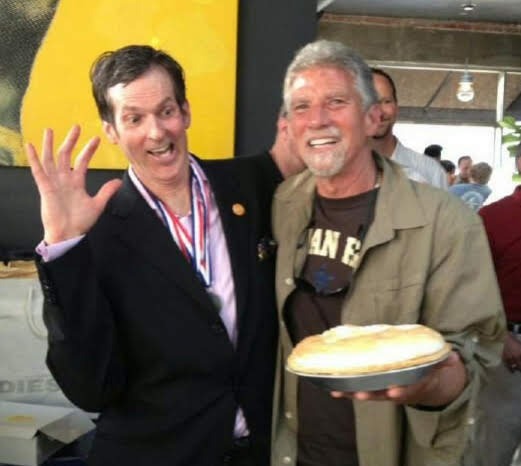
Years later, the phone rang and I took a gamble on joining IBM in the Middle East and Africa. Partly because of opportunities provided to me by Steve and others, I was fortunate to have built a large community of close-knit colleagues within KP, and that community sent me off with a series of parties. At the first of those, Steve and his amazing wife Maureen showed up. Steve came in holding a pie box, pulled out a lemon meringue pie, and said, “Chris, I want to show you the right way to give someone a pie.” He handed me the pie gently and we both broke out laughing.
Later that evening, at a dinner gathering of the physician leadership team at Chevy's in Emeryville, CA. Steve told the wait staff that it was my birthday. They of course came and placed an oversized sombrero on my head and sang me "Las Mañanitas." Steve was cracking up.
Even after I left the U.S., I made a point of staying contact with Steve. When I was asked to lead the implementation of an EMR project here in the Middle East, I phoned Steve and asked if he had any advice, he said, “don’t do it!” adding a wry chuckle.
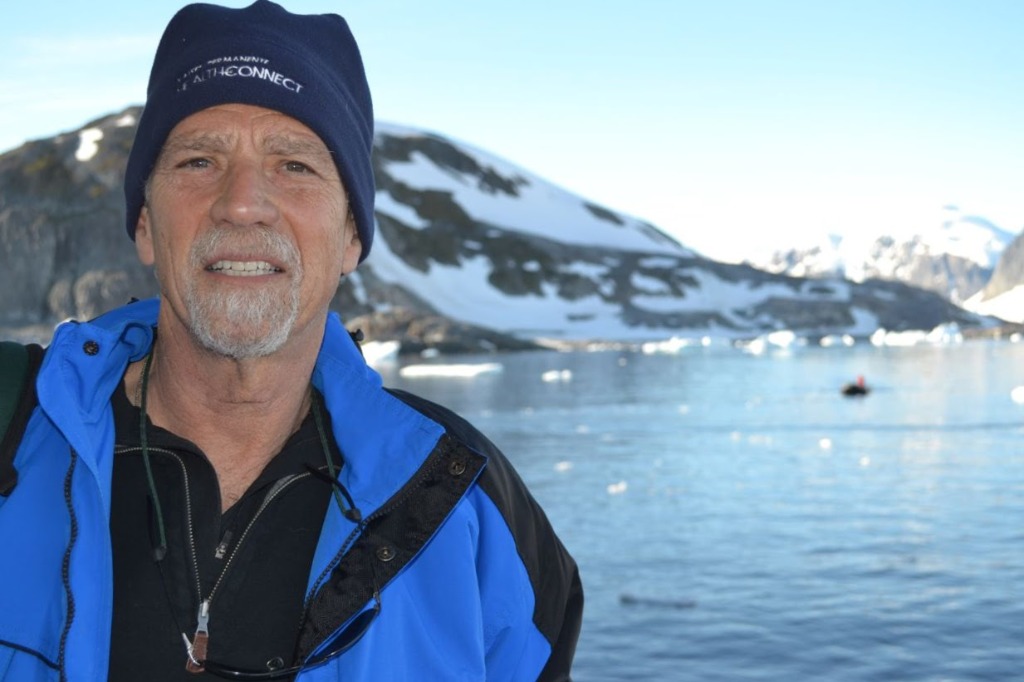
Shortly after his retirement, Steve was diagnosed with an advanced stage of cancer, and his physicians predicted that he had only a few short years to live. In his usual maverick style, he defied all predictions and lived longer, continuing to travel, play tennis, enjoy his children and grandchildren, and even embarking on new hobbies like building his own chicken coop and raising hens.
In the face of time, though, none of us is pardoned, and Steve passed on in August of this year. He distinguished himself through the immeasurable impacts his work had on the health of Kaiser patients, and on the patients of so many health systems that have subsequently emulated Kaiser’s technologically enabled approach to patient care. He was a hugely positive influence on dozens and dozens of my closest colleagues and friends, many of whom have taken what they learned at Kaiser Permanente and applied it at other healthcare organizations.
For me personally, it is not enough to say that my career was dramatically advanced because of Steve. His effect on me has gone far beyond just my career. The best part about working with Steve was that I never felt like I needed to pretend to be anyone other than myself when I was around him. I am sure that is because he never felt any need to pretend at all, and he always seemed completely at ease with who he was. Thank you, Steve, for sharing with me a sliver of your great life. And thanks for making the world a better place.